
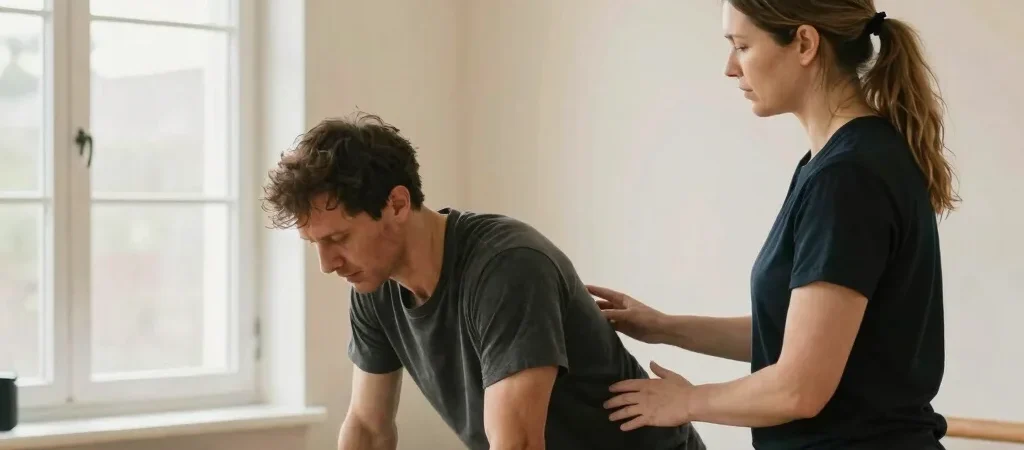
When pain makes you avoid the stairs, shorten a run or hesitate before lifting, it is tempting to search for one clear answer. An assessment is a better place to begin: it looks at what you feel, what you need to do and how your movement responds. From there, rehabilitation can be shaped around the person, not just the sore spot.
Look beyond the sore spot
Pain is important information, but it does not always show exactly what is causing it or what you should stop doing. In an assessment, useful questions include when symptoms began, which movements change them and what daily activities or training you want to return to. That context helps make the next step more considered.
It also makes room for your priorities. Getting back to a regular walk, building confidence with a squat or managing a busy workday may call for different decisions, even when two people describe similar discomfort.
Rehabilitation should have direction
A rehabilitation plan can start with manageable movement and build as your capacity and confidence allow. The right starting point might be adjusting a range of motion, choosing a lighter load or practising a movement at a pace you can control. The point is not to push through every symptom; it is to make informed choices and review how you respond.
Progress is easier to understand when it connects to something meaningful outside the clinic, such as carrying shopping or returning to a training session. If you are unsure whether physiotherapy is the right fit, get in touch with Merkes Performance to discuss what is going on and find a clear next step.